monitoring
Auvik
Cloud-based network monitoring and management for IT teams and MSPs.
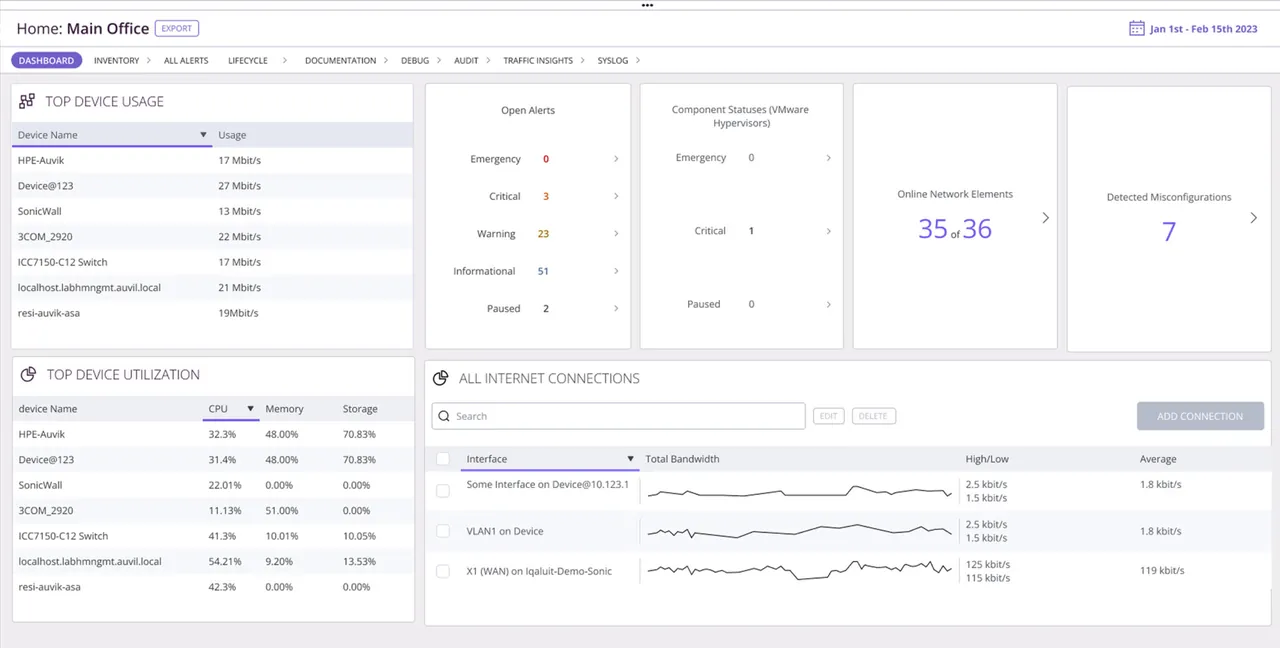
If you have ever walked into a network you did not build and spent your first day just working out what is plugged into what, Auvik is aimed squarely at you. It is a cloud-based network monitoring and management platform from Auvik Networks, and its calling card is automated topology mapping — you point it at a network and it draws the picture for you. It is especially popular with managed service providers who juggle many client sites. This is an independent review; we do not sell Auvik or host any software. Here is the fair take on what it does well and where it may not fit.
What Auvik actually does
Auvik is delivered as SaaS. Instead of standing up a monitoring server, you deploy a lightweight collector inside each network you want to watch, and that collector relays data to Auvik’s cloud, where everything is processed and shown through a web console.
From that data Auvik builds three things people rely on most. First, automated network mapping and topology: it discovers devices, works out how they connect, and keeps the map current as the network changes. Second, configuration backup for supported network devices, so switch and firewall configs are versioned and recoverable after a bad change or a hardware failure. Third, performance and traffic insight — device and link status over time, plus visibility into what traffic is flowing — with alerting when something goes wrong.
Because it is cloud-hosted, Auvik Networks handles platform updates on the back end; there is no monitoring server for you to patch or upgrade.
Where it shines
The mapping is the star, and it genuinely earns its reputation. For onboarding an unfamiliar network, documenting an estate that has drifted out of date, or just answering “what changed?”, an always-current topology map is a real time-saver. Documentation that maintains itself is rare and valuable.
The multi-tenant, cloud model is the second big win. MSPs can watch many client networks from one console without maintaining separate servers per client, and a new site is a matter of dropping in a collector rather than provisioning infrastructure. Config backup is a quiet lifesaver the first time someone fat-fingers a switch.
Because there is no server to run, day-two operational overhead is low — you are not babysitting a monitoring box.
Where it falls short
It is a subscription, and for larger device counts that recurring cost adds up; teams sometimes find it pricey once they scale beyond a handful of sites. It is billed by monitored device, so the number can climb faster than you expect.
The cloud-only model is a genuine constraint for some. If you have strict data-residency rules, air-gapped segments, or a policy against relaying network metadata to a third-party cloud, Auvik may simply be off the table — there is no self-hosted edition to fall back on. You are also dependent on the collector’s reachability and Auvik’s platform being up.
Finally, while it is strong on network topology and config, it is not a deep server- or application-monitoring suite. If you need granular OS, database and app metrics in the same tool, you will feel the edges.
Who it’s for
Auvik is a natural fit for MSPs and internal IT teams that manage distributed or multi-site networks and want fast, low-maintenance visibility with automatic mapping and config backup — especially where keeping network documentation current by hand has become a losing battle.
It is a poor fit if you must keep all monitoring on-premises, if budget is tight at scale, or if your primary need is deep server/application monitoring rather than network topology.
Licensing and cost
Auvik is commercial cloud SaaS, sold on a subscription basis and generally priced by the number of monitored devices and tier. A trial is available so you can evaluate it against a real network first. Exact pricing is quote-/subscription-based and depends on device count and edition, so ignore third-party numbers and check current terms on Auvik’s official site. To start, begin a trial on auvik.com, and when you deploy the collector, confirm what you fetched using how to verify a download.
How it compares — real alternatives
- ManageEngine OpManager — a self-hosted commercial monitor. Choose it over Auvik when you must keep monitoring data in-house and want deeper server monitoring; you take on running the server in exchange.
- PRTG Network Monitor — sensor-based, available self-managed or as a hosted service. A good middle path if you want more than mapping but prefer sensor-count licensing.
- LibreNMS — free, open-source, self-hosted SNMP monitoring. The budget-conscious, in-house alternative if you have the Linux skills and do not need Auvik’s automatic mapping and MSP tooling.
Getting it safely — from the vendor’s official site (auvik.com)
We host nothing and offer no downloads. Auvik is obtained only from Auvik Networks at auvik.com, where you start a trial and are then given the collector to deploy inside your network. Because Auvik is a cloud service, the sensitive step is the collector download — get it straight from the vendor, not a mirror, and verify it using how to verify a download.
FAQ
Is Auvik self-hosted or cloud? Cloud SaaS. You run only a lightweight collector inside each monitored network; there is no monitoring server for you to host. If you need a self-hosted product, look at ManageEngine OpManager or LibreNMS.
Is there a free version? There is a trial for evaluation, but Auvik is a paid subscription — there is no permanently free tier. Pricing is device-based; check auvik.com for current plans.
Is it good for MSPs specifically? Yes — the multi-tenant cloud console and per-site collector model are built for managing many client networks at once, which is a big part of why MSPs favour it.
Where to get it
Auvik is available directly from Auvik Networks. This is an independent catalog — we don't sell or host the software. See plans and start a trial on the official site: auvik.com →.
same segment
Alternatives in Monitoring
All-in-one infrastructure monitoring with sensor-based subscription licensing, self-managed or cloud-hosted.
by PaesslerOpen-source enterprise monitoring for networks, servers, cloud and applications.
by ZabbixLong-standing open-source monitoring engine for hosts, services and network devices.
by Nagios Enterprises